
Last Beacon: Survival
YG Technology FZ-LLCStrategy
4.4719.00 Reviews
- Version
- 1.8.0
- Installs
- 1.00M
- Age Rating
- Everyone 10+
Screenshots
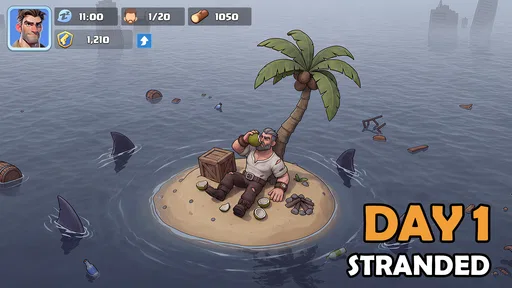
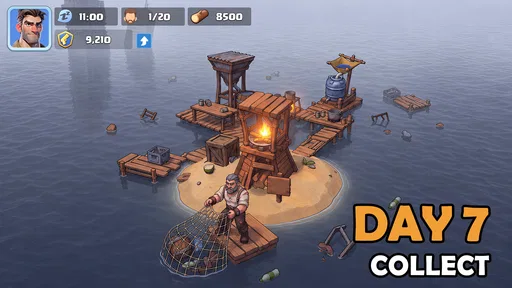
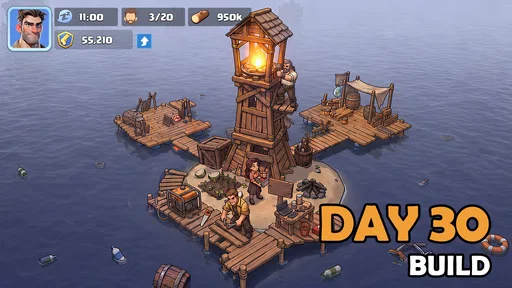
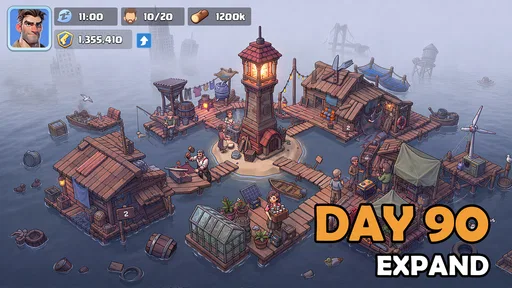
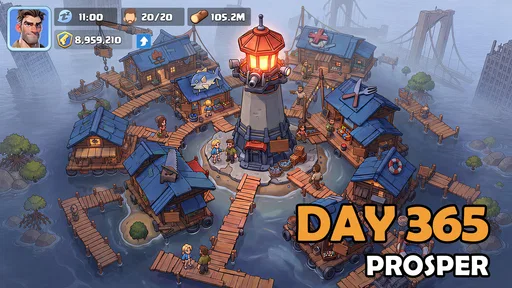
Our Review of Last Beacon: Survival
 Analysis by Appyee
I approached Last Beacon: Survival as a strategy game first and a survival game second. Its central idea is appealing: humanity is trying to recover while living on the ocean, so every decision has a practical consequence. You are not simply collecting resources for the sake of it; the setting makes rebuilding feel temporary, exposed, and dependent on careful planning. That gives the game a more focused identity than a standard base-building title with a different background image.
After spending time with it, I found the strongest part of the experience is the tension between immediate needs and long-term recovery. You want to expand, improve your position, and prepare for fights, but pushing too quickly can leave the settlement vulnerable. The game is free to download, with optional purchases listed from $0.99 to $29.99 per item, so the real question is not only whether the strategy is enjoyable, but also how comfortable you are with a progression model that includes spending.
Building a fragile future on the ocean
The premise gives every activity a useful sense of context. In many strategy games, a new structure is just another icon in a menu. Here, the idea of rebuilding civilization on the water makes each upgrade feel connected to survival. A stronger base is not merely a larger base; it represents a safer place for people who have already lost the world they knew.
I like that this setup naturally supports several kinds of play. Someone who enjoys planning can focus on developing a stable foundation. A more aggressive player can think about preparation for conflict. Another player may prefer the slow satisfaction of making a settlement more capable before taking bigger risks. The ocean setting ties these approaches together without requiring the game to feel like a conventional city builder.
The strategy category matters because the game asks you to think beyond the next tap. Even when an action looks beneficial, it can affect what you are able to do afterward. Spending resources on growth may leave less room for defensive preparation, while prioritizing protection can slow the pace of expansion. I found that trade-off more interesting than simply following a sequence of obvious improvements.
One useful habit is to treat every new construction choice as part of a chain rather than an isolated reward. Before committing to an upgrade, I would consider what it enables, what it consumes, and whether it supports the next goal I have in mind. That approach is especially valuable in a survival setting, where an attractive short-term improvement can create pressure later.
The game is rated Everyone 10+, which makes it easier to recommend to younger strategy fans than many combat-heavy alternatives. Still, the setting and conflict give it a more serious tone than a purely casual building game. I would describe it as approachable rather than childish. A player who likes planning but does not want an especially complicated war simulator may find the balance comfortable.
Why the opening decisions matter
The early phase is where I would encourage new players to slow down. It is tempting to spend every available resource as soon as a button becomes active, but that can make the next objective feel harder than necessary. A better workflow is to decide what kind of position you want first: steady development, stronger readiness for fights, or a flexible mixture of both.
This is one of the less obvious strengths of the design. The ocean setting makes space and security feel limited, so the order of your choices matters more emotionally than it would in a generic settlement game. Even without turning every decision into a puzzle, the game encourages a habit of looking ahead.
I also found that short play sessions can still feel productive if I begin with one clear purpose. Instead of opening the game and spending everything automatically, I might decide to improve the settlement, prepare for a confrontation, or save toward a larger objective. That simple discipline reduces the feeling of being pulled from one notification to another.
For an everyday example, imagine checking the game during a commute or while waiting for dinner. A quick session works best when you already know what you are trying to accomplish. You can review the settlement, make a deliberate improvement, and leave without turning the game into a constant obligation. Players who prefer longer, more involved strategy sessions may want more depth than this rhythm provides, but the structure suits people who enjoy returning regularly.
Progress feels better when it is planned
My main advice is to avoid confusing activity with progress. A busy settlement is not necessarily a strong one. If every resource is immediately converted into visible growth, you may have less flexibility when the game asks you to respond to danger or prepare for a fight. Holding something back can feel slow, but it gives you options.
A second practical tip is to separate “must have now” improvements from “nice to have” improvements. The first group supports survival and your next meaningful objective. The second group makes the settlement look or feel more developed but may not solve an urgent problem. Making that distinction helps prevent impulse spending inside the game and makes the strategic layer clearer.
This is also where the game can create friction. Players who enjoy constant rewards may find deliberate saving less exciting. The experience asks for patience, and patience is not always rewarded with an immediately dramatic moment. If you prefer fast rounds, direct action, or a clearly defined victory screen, a traditional match-based strategy game may be a better fit.
Combat pressure changes the value of preparation
The promise of fighting to help rebuild civilization gives development a sense of urgency. Preparation is not just an optional side activity; it is part of deciding how secure your progress really is. That makes the relationship between expansion and protection important. A larger position can be satisfying, but it can also create more to defend.
I would not recommend treating conflict as something to handle only when it arrives. A stronger approach is to build a reserve of resources and keep your development choices connected to readiness. This does not mean refusing to expand. It means avoiding a situation where every resource has already been committed before you need to respond.
That trade-off is one of the game’s most useful strategic lessons. In a normal builder, growth can feel automatically positive. In Last Beacon: Survival, growth has a cost in attention and preparation. I enjoyed that pressure because it gave ordinary decisions more weight, although players who want a relaxed construction game may find it tiring.
Spending, fairness, and what players should consider
The purchase context deserves a clear explanation. Last Beacon: Survival is free to play, and its listed in-app purchases range from $0.99 to $29.99 per item. That tells me spending is part of the product’s structure, but it does not by itself prove that purchases are required, that they guarantee victory, or that non-paying players face a particular disadvantage. I would not make those claims without direct evidence.
From a player’s point of view, the safest approach is to decide on a personal spending limit before buying anything. Small purchases can feel harmless when considered separately, while several decisions made over time can change the cost of the experience. I would especially recommend pausing before buying during a frustrating moment. If a difficult encounter makes you want to spend immediately, step away and return with a clearer idea of whether the purchase improves your enjoyment or only removes temporary pressure.
The range of available item prices also means different players may experience the economy differently. Someone who never spends will judge the pacing and flexibility from a purely free perspective. Someone who makes occasional purchases will care about whether those purchases feel meaningful rather than necessary. A heavier spender may have a different relationship with progression altogether. Those are separate experiences, so I would avoid treating one player’s pace as universal.
For me, fairness depends on whether the strategic decisions remain meaningful. If spending simply replaces planning, the game would lose much of what makes its setting interesting. If purchases support convenience while preparation and decision-making still matter, the experience has a better chance of feeling like a strategy game rather than a spending test. The listed prices justify paying attention to that distinction, but they do not establish the outcome on their own.
Competitive fairness needs a cautious verdict
The game’s focus on fighting naturally raises a question about competitive balance. A player deciding whether to spend wants to know if money changes access to strength, speed, or recovery. That is a reasonable concern, especially in a strategy game where preparation can affect the result of a confrontation.
My honest verdict is that I would approach any competitive element carefully until I understood how purchases interact with progression in actual play. The presence of optional items does not automatically make competition unfair, but it does make the distinction between strategic skill and paid acceleration important. I would not recommend spending with the expectation that it guarantees better outcomes.
A useful personal rule is to judge the game using the free route first. Learn how the settlement develops, see whether the normal pace feels satisfying, and decide whether you enjoy the decisions before considering a purchase. This prevents the common mistake of paying to solve a problem that may actually come from not yet understanding the game’s priorities.
Another practical tip is to keep notes on what you are trying to achieve rather than buying whenever progress feels slow. If the goal is to prepare for a fight, identify the preparation that matters. If the goal is expansion, determine which improvement genuinely supports it. This turns spending from an emotional reaction into a deliberate choice, even if you ultimately decide not to spend.
Who should play it, and who should skip it?
I think the game is a good match for players who enjoy survival themes, gradual development, and decisions that become more interesting when resources are limited. It should also appeal to people who like checking a settlement regularly and making a few purposeful choices instead of completing one long session every time.
It is less suitable for anyone looking for a purely peaceful city builder. The rebuilding theme is tied to pressure and fighting, so the game’s appeal depends partly on accepting that the settlement is never completely separate from danger. It may also disappoint players who want a deep, traditional strategy simulation with extensive control over every system.
I would skip it if you dislike free-to-play economies on principle, even when purchases are optional in practice. The listed item range is enough to make spending a visible part of the experience, and no strategy game is worth feeling uncomfortable every time you open its shop. A premium strategy title with one upfront price may be a better choice for someone who wants a cleaner relationship with progression.
Likewise, players who prefer quick competitive matches may be happier with a game built around short, self-contained battles. Last Beacon: Survival is more appealing when you enjoy the connection between settlement decisions and future readiness. Its satisfaction comes from building a position over time, not only from winning a single encounter.
Device support and practical expectations
The game supports Android devices running version 6.0 or later, which covers a broad range of older and newer phones. That makes it accessible to people who are not using the latest hardware, although compatibility alone does not tell me how every device will perform. I would still keep expectations sensible on older phones, especially for a strategy game that may involve a busy settlement or several systems on screen.
The current version is 1.3.1, and the developer is YG Technology FZ-LLC. Those details are useful when checking that you are looking at the intended title and the current release rather than an unrelated result with a similar name. The game has an average rating of 4.3 from around four thousand ratings, with close to two hundred written reviews, and it has passed one hundred thousand installs. Those figures suggest an established audience, while still leaving room for individual experiences to vary.
Because the game is free to start, I recommend using the first sessions as a genuine trial rather than assuming you will eventually need to pay. Pay attention to whether the settlement decisions feel satisfying, whether the pressure motivates you, and whether the pace fits your routine. Those answers matter more than popularity when choosing a strategy game for yourself.
What remains important to verify in your own play
There are a few questions I would answer personally before committing to long-term play. First, does the normal progression feel rewarding without purchases? Second, do conflicts test your planning, or do they mainly test how much preparation you have accumulated? Third, can you enjoy the game in short visits without feeling forced to return at inconvenient times?
I would also watch how the game handles failure. A survival strategy game can make setbacks exciting when they teach you something, but frustrating when they erase too much progress without giving you a useful lesson. The right response is not to assume the worst, but to notice whether each difficult moment helps you make a better decision next time.
Finally, I would compare the game’s pressure with your own tolerance for ongoing progression. Some players enjoy having a project that develops gradually over many visits. Others want a complete experience they can finish in one sitting. Neither preference is better, but they lead to very different opinions of the same design.
My recommendation after weighing the trade-offs
Last Beacon: Survival has a strong, specific identity because its ocean setting connects building, survival, and conflict. I enjoyed the way it encourages planning beyond the next upgrade, especially when deciding how much to invest in growth and how much to preserve for security. The best moments come from making a cautious choice early and seeing how it gives you more options later.
Its main caution is the free-to-play structure. The game costs nothing to begin, but the presence of purchases from $0.99 to $29.99 per item means I would play with a clear budget and avoid treating payment as a shortcut to strategic understanding. I also would not promise that competition is automatically fair or unfair without seeing exactly how the economy affects play in each situation.
Overall, I would recommend it to a friend who likes ocean survival themes, patient base development, and strategy that rewards preparation. I would point that friend toward the free experience first, with spending kept optional and deliberate. If you want a relaxed builder, a premium one-time purchase, or fast standalone battles, another option may suit you better. But if rebuilding a fragile human future while managing pressure sounds compelling, this game is worth trying.
Privacy and Permissions
See what permissions an app requests and how it handles your data.
- Location
- approximate location (network-based), precise location (GPS and network-based)
- Phone
- read phone status and identity
- Photos/Media/Files
- read the contents of your USB storage, modify or delete the contents of your USB storage
- Storage
- read the contents of your USB storage, modify or delete the contents of your USB storage
- Camera
- take pictures and videos
- Wi-Fi connection information
- view Wi-Fi connections
- Device ID & call information
- read phone status and identity
- Other
- view network connections, pair with Bluetooth devices, access Bluetooth settings, change network connectivity, full network access, run at startup, control vibration, prevent device from sleeping
Verdict
Strengths of Last Beacon: Survival
- Atmospheric post-apocalyptic world with strong visual presentation.
- Exploration rewards curiosity with hidden resources and locations.
- Survival mechanics create meaningful choices about supplies and equipment.
- Crafting and upgrading systems add useful long-term progression.
- Playable in short sessions while still offering plenty to discover.
Limitations of Last Beacon: Survival
- Resource management can feel restrictive during longer exploration trips.
- Some progression goals require considerable grinding.
- Combat encounters may become repetitive after extended play.
- The interface can feel crowded on smaller phone screens.
- Performance may vary on older or less powerful devices.
Similar Picks in This Category
View All
Clash of Clans
Supercell4.5

Plants vs. Zombies™
ELECTRONIC ARTS3.7

Lords Mobile: Kingdom Wars
IGG.COM4.5

Clash Royale
Supercell4.4

State.io — Conquer the World
CASUAL AZUR GAMES4.1

Car Driving School : Car Games
Spark Game Studios3.9
Frequently Asked Questions
What is Last Beacon: Survival about?
Last Beacon: Survival is a post-apocalyptic survival game focused on exploration, resource gathering, crafting, and base development. You must search dangerous environments for food, materials, equipment, and clues while protecting yourself from hostile threats. Progress depends on managing limited supplies, improving your shelter, and deciding when it is safer to fight, explore, or return to base.
Is Last Beacon: Survival free to download and play?
The game can generally be downloaded without an upfront purchase, but availability and pricing may vary depending on whether you are using Android or iOS. Like many survival titles, it may include optional in-app purchases, advertisements, or premium items. Before installing, check the store listing for current payment details, supported devices, and any restrictions in your region.
Does Last Beacon: Survival require an internet connection?
You should not assume that every feature works offline. Some survival mechanics may be available without a connection, but account services, cloud saves, advertisements, updates, events, or other online functions can require internet access. For the most reliable experience, launch the game while connected and review its current store description before planning to play away from Wi-Fi or mobile data.
Is Last Beacon: Survival suitable for children?
Last Beacon: Survival is designed around danger, survival pressure, combat, and a post-apocalyptic atmosphere, so it may not be suitable for younger children. The appropriate age rating can differ between the Google Play Store and Apple App Store. Parents should check the listed rating, violence descriptions, advertising, chat features, and in-app purchase settings before allowing a child to download it.
What devices are needed to play Last Beacon: Survival smoothly?
Performance depends on your phone or tablet, operating-system version, available storage, and the game’s graphics settings. Newer devices with sufficient memory usually provide faster loading and more stable gameplay, while older hardware may experience lower frame rates, longer loading times, or overheating during extended sessions. Check the official store listing for the latest compatibility requirements before installing.
Play our best games!


